



Hadley Wickham
Chief Scientific Officer
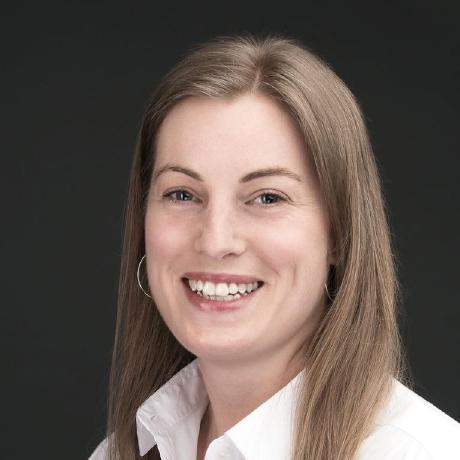
Hi! I’m Hadley Wickham, Chief Scientist at Posit, where (among other things) I lead the tidyverse team. I build tools (computational and cognitive) that make data science easier, faster, and more fun. I’m from New Zealand but I currently live in Houston, TX with my husband and dogs.
Software by Hadley Wickham#




































































































Events attended by Hadley Wickham#


Posts and resources by Hadley Wickham#


Claude Code for R | Hadley Wickham
Talk from rainbowR conference 2026: https://conference.rainbowr.org
If you’ve been paying attention to software engineering social media lately, you might have noticed a lot of noise about Claude Code and the Opus 4.5 model. For me personally, these have pushed AI coding assistance from a “nice to have” to something that feels just as important as git.
In this talk, I’ll show you a couple of my “vibe” coded experiments, but more importantly show you how Claude Code helps me write higher-quality R code faster. I’ve used it a bunch recently for both testthat and dbplyr, two large, well-established code bases where quality is more important than velocity



Translating R for Data Science into Portuguese: A Community-Led Initiative (Beatriz Milz, UFABC)
Translating R for Data Science into Portuguese: A Community-Led Initiative
Speaker(s): Beatriz Milz
Abstract:
How can open-source collaboration help make data science more accessible and expand Posit’s global impact? The book “R for Data Science” by Hadley Wickham, Mine Çetinkaya-Rundel, and Garrett Grolemund is a key resource for learning R and the tidyverse. In a collaborative effort, volunteers from the R community translated the second edition into Brazilian Portuguese, making it freely available online. This talk explores the translation journey, the challenges of adapting technical content, and key lessons learned to support future translation teams.
Materials - https://beamilz.com/talks/en/2025-posit-conf/ posit::conf(2025) Subscribe to posit::conf updates: https://posit.co/about/subscription-management/


Making the most of artificial and human intelligence for data science (Hadley Wickham, Joe Cheng)
Making the most of artificial and human intelligence for data science
Speaker(s): Hadley Wickham; Joe Cheng
Abstract:
This presentation explores the complex and often contradictory nature of large language models (LLMs) in data science, acknowledging the simultaneous excitement and apprehension that we feel toward these technologies. We’ll provide a practical framework to help you understand the LLM ecosystem (from foundation models and hosting to SDKs and applications) that supports our current philosophy: augmenting, not replacing human intelligence. The talk demonstrates how Posit is addressing this space through two complementary approaches: building SDKs and tools that help you create your own LLM-powered solutions, and developing integrated LLM capabilities directly into data science workflows through tools like Positron assistant and databot. We’ll showcase practical, immediately useful applications while addressing current limitations, providing you with both the emotional preparation and technical foundation needed to effectively leverage LLMs in their data science practice today. posit::conf(2025) Subscribe to posit::conf updates: https://posit.co/about/subscription-management/








The Test Set: A Posit Podcast Trailer
Introducing The Test Set–a Posit podcast for data science, coming July 1, 2025.
For data science junkies, anomaly hunters, and those who play outside the confidence interval. Hosted by Michael Chow, Wes McKinney & Hadley Wickham
Subscribe to receive updates: https://pos.it/thetestset



LLMs for Data Science
[2025 - Day 1 - Data Science & Algos] Hadley Wickham shares insights from practical applications of LLMs in data science, exploring three key areas where these tools prove genuinely useful beyond the hype: writing code, writing prose, and rectangling non-rectangular data. For data scientists working with text, images, videos, or audio data, this talk offers valuable perspectives on leveraging LLMs effectively for real workflows and transforming fundamentally unstructured information.
ABOUT THE SPEAKER: Hadley Wickham, Chief Scientist, Posit
Sign up for our “No BS” Newsletter to get the latest technical data & AI content: https://datacouncil.ai/newsletter
ABOUT DATA COUNCIL: Data Council brings together the brightest minds in data to share industry knowledge, technical architectures and best practices in building cutting edge data & AI systems and tools.
FIND US: Twitter: https://twitter.com/datacouncilai LinkedIn: https://www.linkedin.com/company/datacouncil-ai/ Website: https://www.datacouncil.ai/


Wes McKinney & Hadley Wickham (on cross-language collaboration, Positron, career beginnings, & more)
We hosted a special event hosted by Posit PBC with Wes McKinney (Pandas & Apache Arrow) and Hadley Wickham (rstats & tidyverse) to ask questions, share your thoughts, and exchange insights about cross-language collaboration with fellow data community members.
Here’s a preview into what came up in conversation:
- Cross-language collaboration between R and Python
- Positron, a new polyglot data science IDE
- Open source development, how Wes and Hadley got involved in open source and their experiences in building and maintaining open-source projects such as Pandas and the tidyverse.
- Documentation for R and Python, especially in the context of teams that use both languages (shoutout to Quarto!)
- The use of LLMs in data science
- The emergence of libraries like Polars and DuckDB
- Challenges of switching between the two languages
- Package development and maintenance for polyglot teams that have internal packages in both languages
- The future of data science
The chat was on fire for this conversation and we’ve gathered most of the links shared among the community below:
Documentation mentioned: Positron, next-generation data science IDE built by Posit: https://positron.posit.co/ Quarto tabset documentation: https://quarto.org/docs/output-formats/html-basics.html#tabset-groups
Packages / Extensions mentioned: Pins: https://pins.rstudio.com/ Vetiver: https://vetiver.posit.co Orbital: https://orbital.tidymodels.org Elmer: https://elmer.tidyverse.org Tabby Extension: https://quarto.thecoatlessprofessor.com/tabby/
Blog posts: AI chat apps with Shiny for Python: https://shiny.posit.co/blog/posts/shiny-python-chatstream/ Using an LLM to enhance a data dashboard written in Shiny: R Sidebot & Python Sidebot Marco Gorelli Data Science Hangout (polars): https://youtu.be/lhAc51QtTHk?feature=shared Emily Riederer’s blog post on Polars: https://www.emilyriederer.com/post/py-rgo-polars/ Jeffrey Sumner’s tabset example: https://rpy.ai/posts/visualizations%20with%20r%20and%20python/r_python_visualizations Emily Riederer’s blog post on Python and R ergonomics: https://www.emilyriederer.com/post/py-rgo/11 Sam Tyner’s blog post on Lessons from “Tidy Data”: https://medium.com/@sctyner90/10-lessons-from-tidy-data-on-its-10th-anniversary-dbe2195a82b7
Other: Hadley Wickham’s cocktails website: https://cocktails.hadley.nz 5 Posit subscription management to find out about new tools, events, etc.: https://posit.co/about/subscription-management/
New to Posit? Posit builds enterprise solutions and open source tools for people who do data science with R and Python. (We are also the company formerly called RStudio) We’d love to have you join us for future community events!
Every Thursday from 12-1pm ET we host a Data Science Hangout with the community and invite you to join us! You can add that event to your calendar with this link: https://www.addevent.com/event/Qv9211919








R-Ladies Rome (English) - R in Production - Hadley Wickham
In this inspiring talk, dive into the world of R in production with Hadley Wickham, Chief Scientist at Posit PBC (formerly RStudio).
Explore the challenges and best practices for deploying R solutions in real-world production environments, from effective code structuring to ensuring scalability and reliability. Whether you’re a seasoned data scientist or just beginning your journey with R, this event equips you with invaluable insights and actionable tips to drive impactful outcomes in your organization. Don’t miss out on this engaging discussion!
Material:
0:00 Welcome & R-Ladies Introduction by Dorota Rizik (R-Ladies NYC) 6:28 Introduction and Dr. Wickham’s Talk 53:46 Q&A
Have a look at our WebSite for more insights about our events: https://rladiesrome.org


Hadley Wickham - R in Production
R in Production by Hadley Wickham
Visit https://rstats.ai for information on upcoming conferences.
Abstract: In this talk, we delve into the strategic deployment of R in production environments, guided by three core principles to elevate your work from individual exploration to scalable, collaborative data science. The essence of putting R into production lies not just in executing code but in crafting solutions that are robust, repeatable, and collaborative, guided by three key principles:
-
Not just once: Successful data science projects are not a one-off, but will be run repeatedly for months or years. I’ll discuss some of the challenges for creating R scripts and applications that run repeatedly, handle new data seamlessly, and adapt to evolving analytical requirements without constant manual intervention. This principle ensures your analyses are enduring assets not throw away toys.
-
Not just my computer: the transition from development on your laptop (usually windows or mac) to a production environment (usually linux) introduces a number of challenges. Here, I’ll discuss some strategies for making R code portable, how you can minimise pain when something inevitably goes wrong, and few unresolved auth challenges that we’re currently working on.
-
Not just me: R is not just a tool for individual analysts but a platform for collaboration. I’ll cover some of the best practices for writing readable, understandable code, and how you might go about sharing that code with your colleagues. This principle underscores the importance of building R projects that are accessible, editable, and usable by others, fostering a culture of collaboration and knowledge sharing.
By adhering to these principles, we pave the way for R to be a powerful tool not just for individual analyses but as a cornerstone of enterprise-level data science solutions. Join me to explore how to harness the full potential of R in production, creating workflows that are robust, portable, and collaborative.
Bio: Hadley is Chief Scientist at Posit PBC, winner of the 2019 COPSS award, and a member of the R Foundation. He builds tools (both computational and cognitive) to make data science easier, faster, and more fun. His work includes packages for data science (like the tidyverse, which includes ggplot2, dplyr, and tidyr)and principled software development (e.g. roxygen2, testthat, and pkgdown). He is also a writer, educator, and speaker promoting the use of R for data science. Learn more on his website, http://hadley.nz .
Mastodon: https://fosstodon.org/@hadleywickham
Presented at the 2024 New York R Conference (May 17, 2024) Hosted by Lander Analytics (https://landeranalytics.com )


Hadley Wickham on R vs Python
Learn about tidyverse, ggplot2, and the secret to a tech company’s longevity as Hadley Wickham joins @JonKrohnLearns in this episode. He talks about Posit’s rebrand, why tidyverse needs to be in every data scientist’s toolkit, and why getting your hands dirty with open-source projects can be so lucrative for your career.
Watch the full interview “779: The Tidyverse of Essential R Libraries and their Python Analogues — with Dr. Hadley Wickham” here: https://www.superdatascience.com/779


779: The Tidyverse of Essential R Libraries and their Python Analogues — with Dr. Hadley Wickham
#Tidyverse #RProgramming #RLibraries
Tidyverse, ggplot2, and the secret to a tech company’s longevity: Hadley Wickham talks to @JonKrohnLearns about Posit’s rebrand, Tidyverse and why it needs to be in every data scientist’s toolkit, and why getting your hands dirty with open-source projects can be so lucrative for your career.
This episode is brought to you by Intel and HPE Ezmeral Software (https://bit.ly/hpeintel) . Interested in sponsoring a SuperDataScience Podcast episode? Visit https://passionfroot.me/superdatascience for sponsorship information.
In this episode you will learn: • [00:00:00] Introduction • [00:02:55] All about the Tidyverse • [00:15:19] Hadley’s favorite R libraries • [00:28:39] The goal of Posit • [00:34:12] On bringing multiple programming languages together • [00:50:19] The principles for a long-lasting tech company • [00:53:34] How Hadley developed ggplot2 • [01:03:52] How to contribute to the open-source community
Additional materials: https://www.superdatascience.com/779


It’s a Great Time to be an R Package Developer! - posit::conf(2023)
Presented by Jenny Bryan and Hadley Wickham
(Due to unforeseen circumstances, Hadley Wickham presented this talk “slide karaoke” style, from materials prepared by Jenny Bryan.)
In R, the fundamental unit of shareable code is the package. As of March 2023, there were over 19,000 packages available on CRAN. Hadley Wickham and I recently updated the R Packages book for a second edition, which brought home just how much the package development landscape has changed in recent years (for the better!).
In this talk, I highlight recent-ish developments that I think have a great payoff for package maintainers. I’ll talk about the impact of new services like GitHub Actions, new tools like pkgdown, and emerging shared practices, such as principles that are helpful when testing a package.
Presented at Posit Conference, between Sept 19-20 2023, Learn more at posit.co/conference.#
Talk Track: Package development. Session Code: TALK-1132



Hadley Wickham @ Posit | Giving benefit to people using what you build | Data Science Hangout
We were recently joined by Hadley Wickham, Chief Scientist at Posit PBC. Listen in to hear our chat about building tools (like the tidyverse) to make data science easier, faster, and more fun.
36:57 - While I’m bought into developing open source packages to help deliver better processes, any advice to those of us doing that development in getting their company bought in?
You have to give some benefit to the people using (what you’re building)
You’ve got to either remove pain or add pleasure in some way because if you can’t do that and you’re not someone’s direct supervisor, it’s hard to get people to change.
The way I think about the tidyverse is, how do we give people some sort of quick wins so they can be motivated to do the things that are slower where they’re gonna have to learn some new ideas or some new tools. You kind of build up some equity with that person.
They build trust that you’ve helped them in the past and now they’re willing to invest a little bit more time before they see the payoff. But in the early days, it’s all about delivering payoffs as quickly as possible.
And I think if you’re doing, like, you know “my company’s first R package” - the easy pain points are: make themes for your company corporate style guide, make a ggplot2 theme, make an R Markdown, a Quarto theme. Make a Shiny theme that people can just use to get, you know, something that’s reasonably close to whatever your corporate style guide dictates.
That just feels like an easy win for people because it makes them look good inside the corporation and because you’ve put in all the hard work, it’s like three seconds for them to type the right function name to get the right theme.
I think the other bit is making it easier to get access to data. Set up some wrappers around DBI connections to the most important data sources. Provide some conventions around authentication so that stuff just works so that they’re not struggling with “What packages do I need to install? What’s the password? Where’s the path I need?” Just give them some, like, a list of the top ten most common data sources and people will love you by and large.
Follow-up question: Once you identify the things that you think would be useful for people - do you have a philosophy or a way in which you approach putting things together?
When you’re in an environment of scarcity when you’ve only got so much time that you can take out of your everyday job to invest in writing a package, it’s really tough to balance. Like, how do I add new stuff versus making sure the old stuff continues to work?
I think, again, some of it’s about building up trust. So, give people some wins so that when you inevitably break stuff, you’ve got some kind of cushion so people aren’t going to be really angry with you right away. They’re gonna be like, ok, well there’s a little bit of suffering now, but this person saved me so much time.
But yeah, it’s really hard. And particularly as you’re starting out, like, you’re going to make mistakes. That’s inevitable.
You’re going to do things that when you look back a year later, you’re like, why on earth did I do it that way? You’ll want to rip out the whole thing and ride it from scratch. And I think that if it feels horrible, you have to remember, that’s great. It means you’ve grown immensely as a programmer.
Certainly if you have my kind of mindset, you have to resist the temptation to rip things out and redo them as much as possible and just focus on making the next generation better rather than breaking what stuff people already have.
So I don’t have any great answers here, but I think you just have to think about those tensions of “how do I keep my forward velocity up while getting better as a programmer and evolving over time, but also thinking about how do you make the things you did a long time ago better?”
► Subscribe to Our Channel Here: https://bit.ly/2TzgcOu
Follow Us Here: Website: https://www.posit.co LinkedIn: https://www.linkedin.com/company/posit-software Twitter: https://twitter.com/posit_pbc
To join future data science hangouts, add to your calendar here: pos.it/dsh (All are welcome! We’d love to see you!)
Come hangout with us!


What does superseded mean? Package development lifecycle process and the meaning of superseded.
An important part of the process of package lifecycle and package development is not just adding new functions. It’s is equally important to remove functions.
Hadley Wickham shares about the package lifecycle process and what ‘supersede’ means for functions.
See the full video about the purrr 1.0 release: https://youtu.be/EGAs7zuRutY
More about the package lifecycle stages: https://lifecycle.r-lib.org/articles/stages.html
Maintaining the house that tidyverse built: https://youtu.be/izFssYRsLZs


What does deprecated mean? Package lifecycle and the process of deprecation.
An important part of the process of package lifecycle and package development is not just adding new functions. It’s equally important to remove functions.
Hadley Wickham shares about the package lifecycle process and what ‘deprecation’ means for functions.
See the full video about the purrr 1.0 release: https://youtu.be/EGAs7zuRutY
More about the package lifecycle stages: https://lifecycle.r-lib.org/articles/stages.html
Maintaining the house that tidyverse built: https://youtu.be/izFssYRsLZs


Hadley Wickham | {purrr} 1.0: A complete and consistent set of tools for functions and vectors
{purrr} has reached the 1.0 milestone, with new features like progress bars, improvements to the map family, and tools for list flattening and simplification.
0:00 Introduction 0:11 What is purrr? 00:32 What is functional programming? 03:08 Announcing purrr 1.0 03:58 Progress bars 05:18 Better error messages 07:18 New map function: map_vec() 09:58 New list_* functions 12:04 Flattening and simplification 17:40 Breaking Changes 22:34 How the tidyverse handles deprecation 24:41 An overview of functional programming 26:22 Closing, resources to help with deprecation, how to submit issues
See more in the {purrr} 1.0.0 release blog post! https://www.tidyverse.org/blog/2023/03/tidyverse-2-0-0/


Embracing R and Python
Listen to Posit’s Chief Scientist Hadley Wickham talk about the future of Posit.
Visit www.posit.co to learn more


Keynote: Hadley Wickham - Embracing multi-lingual data science | PyData Global 2022
RStudio recently changed its name to Posit to reflect the fact that we’re already a company that does more than just R. Come along to this talk to hear a few of the reasons that we love R, and to learn about some of the open source tools we’re working on for python.
PyData is an educational program of NumFOCUS, a 501(c)3 non-profit organization in the United States. PyData provides a forum for the international community of users and developers of data analysis tools to share ideas and learn from each other. The global PyData network promotes discussion of best practices, new approaches, and emerging technologies for data management, processing, analytics, and visualization. PyData communities approach data science using many languages, including (but not limited to) Python, Julia, and R.
PyData conferences aim to be accessible and community-driven, with novice to advanced level presentations. PyData tutorials and talks bring attendees the latest project features along with cutting-edge use cases.
00:00 Welcome! 00:10 Help us add time stamps or captions to this video! See the description for details.
Want to help add timestamps to our YouTube videos to help with discoverability? Find out more here: https://github.com/numfocus/YouTubeVideoTimestamps





Posit Meetup | Jake Riley, Children’s Hospital of Philadelphia | Translating Facts to Insights
RStudio Healthcare Meetup:
Translating facts into insights at Children’s Hospital of Philadelphia Led by Jake Riley, data analyst at The Children’s Hospital of Philadelphia
Abstract: {headliner} is a new R package to add dynamic, insightful text to plots and reports. {headliner} generates useful talking points that users can string together using {glue} syntax. This makes it easy to write an informative sentences without adding a lot of technical debt to a project. Learn how to get started with {headliner} and ways we have used it at The Children’s Hospital of Philadelphia.
Speaker Bio: Jake Riley is a data analyst at The Children’s Hospital of Philadelphia. He is the author of several R packages related to data visualization and automated exploratory analysis. You can find his published work [simplecolors] and [shinyobjects] on CRAN with more packages on the way.
Timestamps: 0:49 - Start of talk 1:25 - Dashboards focused on facts vs. insights 2:56 - What’s a good title for a chart? 5:09 - Intro to headliner package 7:41- using glue() under the hood 14:04 - helpers for working with data frames: compare_conditions() 18:41 - using ggtext 21:27 - example using pixar_films 23:40 - how they’ve used it at CHOP 28:05 - Next steps for headliner package 29:32 - Start of Q&A session
Questions: 29:32 - Can you use any package you want in your organization? 31:13 - How do you load previous datasets to compare to current datasets? 32:48 - When you mentioned a front page on RStudio Connect (with the headlines), what is that? 33:25 - Is anyone using this for manuscripts at CHOP now? 36:24 - What has the adoption of R or Python been within the hospital analytics team? 37:28 - My manager is very leery of R because of technical depth. Any suggestions for convincing her of R’s value? 42:22 - How does CHOP use R for non-clinical analysis? 43:36 - How do you train new people to use R? 46:28 - How do you compare last week’s analysis to this week’s? 49:37 - Were there any major challenges in creating the hospital’s internal package?
Resources/links shared: Jake’s LinkedIn: https://www.linkedin.com/in/jake-riley-70736a3/ headliner package: https://github.com/rjake/headliner waldo package: https://www.tidyverse.org/blog/2020/10/waldo/ Examples of R in Life Science & Healthcare: https://www.rstudio.com/champion/life-science Chris Bumgardner’s talk on building an R-based analytic practice at Children’s Wisconsin: https://youtu.be/pHZ8dsc0PhY simplecolors package to generate hex codes using uniformly named colors: https://rjake.github.io/simplecolors/ R Packages book by Hadley Wickham & Jenny Bryan: https://r-pkgs.org/
Meetup Links: Future events: rstd.io/community-events-calendar If anyone’s interested in speaking at a future meetup, we’d love to hear from you too! rstd.io/meetup-speaker-form


Hadley Wickham | testthat 3.0.0 | RStudio (2020)
In this webinar, I’ll introduce some of the major changes coming in testthat 3.0.0. The biggest new idea in testthat 3.0.0 is the idea of an edition. You must deliberately choose to use the 3rd edition, which allows us to make breaking changes without breaking old packages. testthat 3e deprecates a number of older functions that we no longer believe are a good idea, and tweaks the behaviour of expect_equal() and expect_identical() to give considerably more informative output (using the new waldo package).
testthat 3e also introduces the idea of snapshot tests which record expected value in external files, rather than in code. This makes them particularly well suited to testing user output and complex objects. I’ll show off the main advantages of snapshot testing, and why it’s better than our previous approaches of verify_output() and expect_known_output().
Finally, I’ll go over a bunch of smaller quality-of-life improvements, including tweaks to test reporting and improvements to expect_error(), expect_warning() and expect_message().
Webinar materials: https://rstudio.com/resources/webinars/testthat-3/
About Hadley: Hadley Wickham is the Chief Scientist at RStudio, a member of the R Foundation, and Adjunct Professor at Stanford University and the University of Auckland. He builds tools (both computational and cognitive) to make data science easier, faster, and more fun. You may be familiar with his packages for data science (the tidyverse: including ggplot2, dplyr, tidyr, purrr, and readr) and principled software development (roxygen2, testthat, devtools, pkgdown). Much of the material for the course is drawn from two of his existing books, Advanced R and R Packages, but the course also includes a lot of new material that will eventually become a book called “Tidy tools”


dplyr 1.0.0 and vctrs
dplyr now makes heavy use of vctrs behind the scenes. This brings with it greater consistency and (hopefully!) more useful error messages


