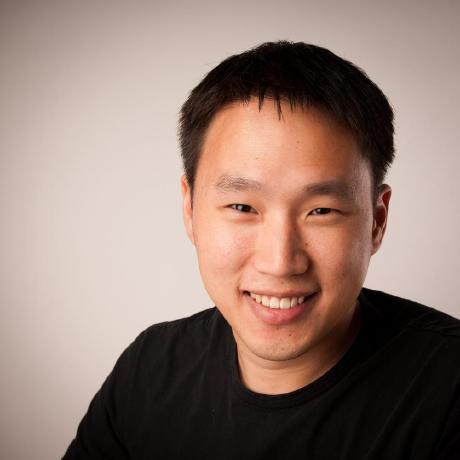

Mine Çetinkaya-Rundel
Senior Developer Advocate
I am a Professor of the Practice and the Director of Undergraduate Studies at the Department of Statistical Science and an affiliated faculty in the Computational Media, Arts, and Cultures program at Duke University. I am also the Director of the First-Year Experience in Trinity College of Arts & Sciences. My work focuses on innovation in statistics and data science pedagogy, with an emphasis on computing, reproducible research, student-centered learning, and open-source education. I work on integrating computation into the undergraduate statistics curriculum, using reproducible research methodologies and analysis of real and complex datasets. In Fall 2025, I’m teaching STA 199 - Introduction to Data Science and Statistical Thinking. My office hours are Fridays 12:45-2:15 pm in Old Chem 211C. Read more below or find me on Mastodon and Bluesky.
Software by Mine Çetinkaya-Rundel#
























Events attended by Mine Çetinkaya-Rundel#


Posts and resources by Mine Çetinkaya-Rundel#


The dessert-first approach to teaching data science | Mine Cetinkaya-Rundel | Data Science Hangout
ADD THE DATA SCIENCE HANGOUT TO YOUR CALENDAR HERE: https://pos.it/dsh - All are welcome! We’d love to see you!
We were recently joined by Mine Çetinkaya-Rundel, Professor of the Practice at Duke University and Senior Developer Advocate at Posit PBC, to chat about her cake-first teaching philosophy, strategies for communicating technical results to non-technical stakeholders, and career advice on learning new tools later in life, among other things.
In this Hangout, we explore Mine’s unique approach to explaining difficult topics to students. She describes her method as “let them eat cake first,” where she shows learners the final, compelling result (like a visualization) before teaching them the “ingredients” or technical steps required to get there. By establishing the motivation and the destination first, she finds students are more willing to invest the effort into learning the necessary coding and data cleaning logic.
Resources mentioned in the video and zoom chat: Mine’s Coursera 4-course series: Data Science with R Specialization → https://www.coursera.org/specializations/data-science-r TidyTuesday (Weekly Data Project) → https://github.com/rfordatascience/tidytuesday , The Test Set Podcast → https://podcasts.apple.com/us/podcast/the-test-set-by-posit/id1823736938
If you didn’t join live, one great discussion you missed from the chat was about the transition from Excel to coding languages like R and Python. Attendees agreed that Excel often acts as a “gateway drug” to data science, shared war stories about managing massive VLOOKUPs (laugh/cry emojis for everyone), and debated the undeniable and lingering utility of spreadsheets for communicating with business stakeholders. Spreadsheets will never go away and many of us are totally ok with that because we still use them every day! Let us know below if you’d like to hear more about this topic
► Subscribe to Our Channel Here: https://bit.ly/2TzgcOu
Follow Us Here: Website: https://www.posit.co Hangout: https://pos.it/dsh The Lab: https://pos.it/dslab LinkedIn: https://www.linkedin.com/company/posit-software Bluesky: https://bsky.app/profile/posit.co
Thanks for hanging out with us!
Timestamps 00:00 Introduction 04:42 “Why R initially and why still R?” 10:30 “How do you balance it all?” 15:28 “How do you stay up to date on newer techniques?” 20:13 “What is your approach for explaining difficult topics to students?” 25:58 “How do you identify appropriate datasets for beginners?” 32:21 “How frustrating is it when you see statistics being used in a misleading way?” 38:26 “How to communicate with people from different fields?” 44:23 Career advice 48:28 “Have you ever convinced an organization to abandon Excel?” 49:25 “How is statistics viewed these days in the context of things like AI and ML?” 52:38 “Was there a tipping point where you felt experienced enough to give keynotes?”


Translating R for Data Science into Portuguese: A Community-Led Initiative (Beatriz Milz, UFABC)
Translating R for Data Science into Portuguese: A Community-Led Initiative
Speaker(s): Beatriz Milz
Abstract:
How can open-source collaboration help make data science more accessible and expand Posit’s global impact? The book “R for Data Science” by Hadley Wickham, Mine Çetinkaya-Rundel, and Garrett Grolemund is a key resource for learning R and the tidyverse. In a collaborative effort, volunteers from the R community translated the second edition into Brazilian Portuguese, making it freely available online. This talk explores the translation journey, the challenges of adapting technical content, and key lessons learned to support future translation teams.
Materials - https://beamilz.com/talks/en/2025-posit-conf/ posit::conf(2025) Subscribe to posit::conf updates: https://posit.co/about/subscription-management/



Leveraging LLMs for student feedback in introductory data science courses (Mine Çetinkaya-Rundel)
Leveraging LLMs for student feedback in introductory data science courses
Speaker(s): Mine Cetinkaya-Rundel
Abstract:
A considerable recent challenge for learners and teachers of data science courses is the proliferation of the use of LLM-based tools in generating answers. In this talk, I will introduce an R package that leverages LLMs to produce immediate feedback on student work to motivate them to give it a try themselves first. I will discuss technical details of augmenting models with course materials, backend and user interface decisions, challenges around evaluations that are not done correctly by the LLM, and student feedback from the first set of users. Finally, I will touch on incorporating this tool into low-stakes assessment and ethical considerations for the formal assessment structure of the course relying on LLMs.
Slides - http://duke.is/help-from-ai-conf25 posit::conf(2025) Subscribe to posit::conf updates: https://posit.co/about/subscription-management/


Exploratory Data Analysis with R in Positron
Learn exploratory data analysis (EDA) in R with this tutorial by Mine Çetinkaya-Rundel. Using Positron, Mine guides you through a real-world project, ’exploring deadlines,’ to analyze the impact of homework deadlines on student performance and stress levels. Discover how to effectively clean, filter, and visualize data using ggplot2 for insightful comparisons. This tutorial emphasizes best practices for data organization and clear data presentation while highlighting Positron’s features that streamline your data analysis workflow. Perfect for anyone looking to master data visualization in R and enhance their data science skills in this new IDE.
0:00 Introduction 0:25 Opening a new Positron project 1:48 Loading and exploring data 3:44 Creating a new R file 4:05 Running exploratory data analysis 16:37 Formatting code with Air 19:22 Copying a plot
Positron documentation: https://positron.posit.co/ Download Positron: https://positron.posit.co/download.html Read the blog post: https://posit.co/blog/eda-in-positron
Air documentation: https://posit-dev.github.io/air/


Quarto Dashboards: from zero to publish in one hour
From R/Medicine 2025
You already analyze and summarize your data with R and Quarto. What’s next?
You can share your insights or allow others to make their own conclusions in eye-catching dashboards and straight-forward to author, design, and deploy Quarto Dashboards. With Quarto Dashboards, you can create elegant and production-ready dashboards using a variety of components, including static graphics, interactive widgets, tabular data, value boxes, text annotations, and more.
Additionally, with intelligent resizing of components, your Quarto Dashboards look great on devices of all sizes. And importantly, you can author Quarto Dashboards without leaving the comfort of your “home” – in plain text markdown with any text editor. In this one-hour demo we will build and publish a Quarto Dashboard – you can code-along or sit back and enjoy the show!
Mine Çetinkaya-Rundel, Professor of the Practice at Duke University and Developer Educator at Posit
Mine’s work focuses on innovation in statistics and data science pedagogy, with an emphasis on computing, reproducible research, student-centered learning, and open-source education as well as pedagogical approaches for enhancing retention of women and under-represented minorities in STEM.
Mine works on the OpenIntro project, whose mission is to make educational products that are free, transparent, and lower barriers to education. As part of this project she co-authored four open-source introductory statistics textbooks – latest is the 2nd edition of Introduction to Modern Statistics.
She is also a co-author on R for Data Science, the creator and maintainer of Data Science in a Box, and she teaches popular data analysis and data science with R courses on Coursera. Mine is a Fellow of the ASA and Elected Member of the ISI as well as a Waller and Hogg award winner for teaching excellence. In 2024, she was elected as Vice President of the International Association for Statistical Education (IASE).
Resources R/Medicine: https://rconsortium.github.io/RMedicine_website/ R Consortium: https://www.r-consortium.org/




Quarto Dashboards 3: Theming and Styling | Mine Çetinkaya-Rundel | Posit
Theming and styling Quarto dashboards built with R and/or Python.
Before watching this video, you might want to watch Parts 1 & 2.
This video takes you through
0:00 - Theming (including Bootswatch themes, light/dark mode, customizing themes with SCSS) 3:55 - Styling 4:55 - Live coding demo
Slides can be found at https://mine.quarto.pub/quarto-dashboards/3-theming-styling and the starter documents for the accompanying exercises at https://github.com/mine-cetinkaya-rundel/olympicdash .
Materials for all parts of the videos can be accessed at https://mine.quarto.pub/quarto-dashboards .
You already analyze and summarize your data in computational notebooks with R and/or Python. What’s next? You can share your insights or allow others to make their own conclusions in eye-catching dashboards and straight-forward to author, design, and deploy Quarto Dashboards, regardless of the language of your data processing, visualization, analysis, etc. With Quarto Dashboards, you can create elegant and production-ready dashboards using a variety of components, including static graphics (ggplot2, Matplotlib, Seaborn, etc.), interactive widgets (Plotly, Leaflet, Jupyter Widgets, htmlwidgets, etc.), tabular data, value boxes, text annotations, and more. Additionally, with intelligent resizing of components, your Quarto Dashboards look great on devices of all sizes. And importantly, you can author Quarto Dashboards without leaving the comfort of your “home” – in plain text markdown with any text editor (VS Code, RStudio, Neovim, etc.) or any notebook editor (JupyterLab, etc.).
This workshop will walk you through building an increasingly complex dashboard using various layout options and deploy them as static web pages (with no special server required) as well as with a Shiny Server on the backend for enhanced interactivity.
This course is for you if you:
- do data analysis in computational notebooks
- share your results with your audience in static or interactive dashboards
- want to improve the design, user interface, and experience of your dashboards


Quarto Dashboards 2: Components | Mine Çetinkaya-Rundel | Posit
Building dashboards in R and/or Python with Quarto, one component at a time.
Before watching this video, you might want to watch Part 1.
This video takes you through
0:00 - An overview of dashboard components 0:11 - Navigation bar and pages 4:55 - Sidebars, rows, columns, and tabsets 11:07 - Cards 22:40 - Live coding demo
Slides can be found at https://mine.quarto.pub/quarto-dashboards/2-dashboard-components and the starter documents for the accompanying exercises at https://github.com/mine-cetinkaya-rundel/olympicdash .
Materials for all parts of the videos can be accessed at https://mine.quarto.pub/quarto-dashboards


Quarto Dashboards 1: Hello, Dashboards! | Mine Çetinkaya-Rundel | Posit
You already analyze and summarize your data in computational notebooks with R and/or Python. What’s next? You can share your insights or allow others to make their own conclusions in eye-catching dashboards and straight-forward to author, design, and deploy Quarto Dashboards, regardless of the language of your data processing, visualization, analysis, etc. With Quarto Dashboards, you can create elegant and production-ready dashboards using a variety of components, including static graphics (ggplot2, Matplotlib, Seaborn, etc.), interactive widgets (Plotly, Leaflet, Jupyter Widgets, htmlwidgets, etc.), tabular data, value boxes, text annotations, and more. Additionally, with intelligent resizing of components, your Quarto Dashboards look great on devices of all sizes. And importantly, you can author Quarto Dashboards without leaving the comfort of your “home” – in plain text markdown with any text editor (VS Code, RStudio, Neovim, etc.) or any notebook editor (JupyterLab, etc.).
This video takes you through
0:00 - Overview of building dashboards with Quarto 0:15 - Dashboard basics 7:40 - First dashboard in R 10:30 - First dashboard in Python 11:43 - Live coding demo
Slides can be found at https://mine.quarto.pub/quarto-dashboards/1-hello-dashboards/#/title-slide and the starter documents for the accompanying exercises at https://github.com/mine-cetinkaya-rundel/olympicdash .
Materials for all parts of the videos can be accessed at https://mine.quarto.pub/quarto-dashboards


Reproducible Manuscripts with Quarto - posit::conf(2023)
Presented by Mine Çetinkaya-Rundel
In this talk, we present a new capability in Quarto that provides a straightforward and user-friendly approach to creating truly reproducible manuscripts that are publication-ready for submission to popular journals. This new feature, Quarto manuscripts, includes the ability to produce a bundled output containing a standardized journal format, source documents, source computations, referenced resources, and execution information into a single bundle that is ingested into journal review and production processes. We’ll demo how Quarto manuscripts work and how you can incorporate them into your current manuscript development process as well as touch on pain points in your current workflow that Quarto manuscripts help alleviate.
Presented at Posit Conference, between Sept 19-20 2023, Learn more at posit.co/conference.#
Talk Track: Quarto (1). Session Code: TALK-1070


Teaching the tidyverse in 2023 | Mine Çetinkaya-Rundel
Recommendations for teaching the tidyverse in 2023, summarizing package updates most relevant for teaching data science with the tidyverse, particularly to new learners.
00:00 Introduction 00:46 Using addins to switch between RStudio themes (See https://github.com/mine-cetinkaya-rundel/addmins for more info) 01:40 Native pipe 03:08 Nine core packages in tidyverse 2.0.0 07:15 Conflict resolution in the tidyverse 11:30 Improved and expanded *_join() functionality 22:05 Per operation grouping 27:41 Quality of life improvements to case_when() and if_else() 31:41 New syntax for separating columns 34:51 New argument for line geoms: linewidth 36:08 Wrap up
See more in the Teaching the tidyverse in 2023 blog post https://www.tidyverse.org/blog/2023/08/teach-tidyverse-23


Get started with Quarto | Mine Çetinkaya-Rundel
This video walks you through creating documents, presentations, and websites and publishing with Quarto. The video features authoring Quarto documents with executable R code chunks using the RStudio Visual Editor (https://quarto.org/docs/visual-editor/) .
00:00 Introduction 00:34 Authoring a document with Quarto 01:13 Using the RStudio visual editor 04:13 Code chunks and chunk options 06:31 Inserting cross references to figures and tables (https://quarto.org/docs/authoring/cross-references.html ) 08:56 Adding a citation from a DOI (https://quarto.org/docs/visual-editor/technical.html#citations ) 10:10 Seamlessly switching between output formats 10:58 Creating Quarto presentations (https://quarto.org/docs/presentations/ ) 14:36 Customizing the output location of code in presentations (https://quarto.org/docs/presentations/revealjs/#output-location ) 16:09 Creating a website from scratch (https://quarto.org/docs/websites/ ) 19:19 Creating multi-format documents (https://quarto.org/docs/output-formats/html-multi-format.html ) 20:22 Publishing the website to QuartoPub (https://quarto.org/docs/publishing/quarto-pub.html )


posit::conf(2023) Workshop: Teaching Data Science Masterclass
Register now: http://pos.it/conf Instructor: Dr. Mine Çetinkaya-Rundel Workshop Duration: 1-Day Workshop
This course is for you if you: • you want to learn / discuss curriculum, pedagogy, and computing infrastructure design for teaching data science with R and RStudio using the tidyverse and Quarto • you are interested in setting up your class in Posit Cloud • you want to integrate version control with git into your teaching and learn about tools and best practices for running your course on GitHub
This masterclass is aimed primarily at participants teaching data science in an academic setting in semester-long courses, however much of the information and tooling we introduce is applicable for shorter teaching experiences like workshops and bootcamps as well. Basic knowledge of R is assumed and familiarity with the tidyverse and Git is preferred.
There has been significant innovation in introductory statistics and data science courses to equip students with the statistical, computing, and communication skills needed for modern data analysis. Success in data science and statistics is dependent on the development of both analytical and computational skills, and the demand for educators who are proficient at teaching both these skills is growing. The goal of this masterclass is to equip educators with concrete information on content, workflows, and infrastructure for painlessly introducing modern computation with R and RStudio within a data science curriculum. In a nutshell, the day you’ll spend in this workshop will save you endless hours of solo work designing and setting up your course.
Topics will cover teaching the tidyverse in 2023, highlighting updates to R for Data Science (2nd ed) and Data Science in a Box as well as present tooling options and workflows for reproducible authoring, computing infrastructure, version control, and collaboration.
The workshop will be comprised of four modules: • Teaching data science with the tidyverse and Quarto • Teaching data science with Git and GitHub • Organizing, publishing, and sharing of course materials • Computing infrastructure for teaching data science
Throughout each module we’ll shift between the student perspective and the instructor perspective. The activities and demos will be hands-on; attendees will also have the opportunity to exchange ideas and ask questions throughout the session.
In addition to gaining technical knowledge, participants will engage in discussion around the decisions that go into developing a data science curriculum and choosing workflows and infrastructure that best support the curriculum and allow for scalability. We will also discuss best practices for configuring and deploying classroom infrastructures to support these tools


BioC 2022 - Hello, Quarto!
Mine Çetinkaya-Rundel, PhD., Professor of the Practice at Duke University, Data Scientist and Professional Educator at RStudio, Inc., gives her keynote presentation at the Bioconductor Conference 2022. Dr. Cetinkaya presents Quarto, an open-source scientific and technical publishing system built on Pandoc.
Dr. Mine began her presentation by introducing Quarto and her personal experience using and teaching it to others. She then continued by giving an overview of the R Markdown ecosystem which includes packages like xaringa, Distill, Blogdown, Rmarkdown, and more. She explained the use of Quarto with these packages along with some other Quarto highlights. Afterward, Dr. Mine gave her first demo of Quarto which included setting up and sharing some handy features. Dr. Mine also gives another demonstration on publishing with Quarto and an overview of the features of collaboration. Dr. Mine then gives a second demonstration of collaborating and teaching with Quarto. To wrap up the presentation, Dr. Mine shared about reimagining open source and the work done by Openscapes and their mission for open practices accelerating data-driven solutions, and increasing diversity, equity, inclusion, and belonging in science. The presentation ended with a questions and answers session from the audience.
Main Sections
0:00 Introduction 4:29 Quarto! 6:12 Share 10:57 The R Markdown ecosystem 11:59 Quarto highlights 13:40 Demo of Quarto 21:40 Demo Quarto Publishing 22:58 Quarto rundown 25:23 Collaborate 28:43 Demo 2 34:07 Teaching with Quarto 40:39 Reimagine 44:03 Q&A and Resources
More Resources
Bioconductor Conference Site: https://bioc2022.bioconductor.org/ BioC2022 Github: https://github.com/Bioconductor/BioC2022
Main Site: https://www.r-consortium.org/ News: https://www.r-consortium.org/news Twitter: https://twitter.com/Rconsortium LinkedIn: https://www.linkedin.com/company/r-consortium


Quarto at rstudio::conf(2022)
rstudio::conf(2022) will feature a variety of workshops and talks on Quarto. Join us in Washington DC this July 25-28 to learn more about Quarto and hear from folks using Quarto to create, share, and collaborate


RStudio Cloud Demo with Dr. Mine Çetinkaya-Rundel
Much has been written in the statistics and data science education literature about pedagogical tools and approaches to provide a practical computational foundation for students. However a common friction point for getting students (and faculty) started with computing is installation and setup. Circumventing the installation and setup steps early in the course by having students access R and RStudio in the cloud can minimize frustration and improve buy in. RStudio Cloud is a lightweight and easy to set up / use solution to this problem. In this talk we will discuss pedagogical reasons for teaching computing with R on the cloud as well as share best practices and tips for setting up your learners for success on RStudio Cloud. We will also provide an opportunity for the audience to experience computing in RStudio Cloud first hand, demo its newest features, and highlight a suite of ready to use resources for teaching R to new learners.
Read more in the follow-up blog post: https://www.rstudio.com/blog/teaching-data-science-in-the-cloud/


Mine Çetinkaya-Rundel | Teaching R online with RStudio Cloud | RStudio (2020)
RStudio Cloud is a lightweight and easy to set up / use solution to teaching R online, in the browser. In this webinar we will walk you through the steps of setting up your course on RStudio Cloud, highlighting the various functionalities for teachers and students. We will also discuss best practices and provide an opportunity for the audience to experience the setup first hand. Additionally, we highlight a suite of ready to use resources for teaching an introduction to data science and statistical thinking course using R.
Webinar materials: https://rstudio.com/resources/webinars/teaching-r-online-with-rstudio-cloud/
About Mine: Mine Çetinkaya-Rundel is Professional Educator and Data Scientist at RStudio as well as Senior Lecturer in the School of Mathematics at University of Edinburgh (on leave from Department of Statistical Science at Duke University). Mine’s work focuses on innovation in statistics and data science pedagogy, with an emphasis on computing, reproducible research, student-centered learning, and open-source education as well as pedagogical approaches for enhancing retention of women and under-represented minorities in STEM. Mine works on integrating computation into the undergraduate statistics curriculum, using reproducible research methodologies and analysis of real and complex datasets. She also organizes ASA DataFest and works on the OpenIntro project. She is also the creator and maintainer of datasciencebox.org and she teaches the popular Statistics with R MOOC on Coursera


Mine Çetinkaya-Rundel | Making the Shiny Contest | RStudio (2020)
In January 2019 RStudio launched the first-ever Shiny contest to recognize outstanding Shiny applications and to share them with the community. We received 136 submissions for the contest and reviewing them was incredibly inspiring and humbling. In this talk, we shine a spotlight on the backstage: the inspiration behind the contest, the process of evaluation, what we learned about Shiny developers and how we can better support them, and what we learned about running contests and how we hope to improve the Shiny Contest experience. We also highlight some of the winning apps as well as the newly revamped Shiny Gallery, which features many noteworthy contest submissions. Finally, we introduce the new process for submitting your apps to the Shiny Gallery and, of course, to Shiny Contest 2020! https://rstudio.com/resources/rstudioconf-2020/making-the-shiny-contest/


Tidyverse Train-the-Trainer Certification Workshop - rstudio::conf(2019L)
What is the 2-day Tidyverse Train-the-Trainer Workshop? That’s a great question, I’m glad you asked.
Register at https://rstd.io/conf Learn more at https://rstd.io/conf-agenda
Tidyverse Train-the-Trainer Certification Workshop - 2 Days
- Day 1 of the course will be co-taught by Mine Cetinkaya-Rundel and Garrett Grolemund, RStudio Data Scientists and Professional Educators.
- On Day 2, Mine will teach the Shiny track and Garrett will teach the Tidyverse track.
This two-day workshop will equip you to teach R effectively. We will draw on RStudio’s experience teaching R to recommend tips for designing, teaching, and supporting short R courses.
On Day 1 of the course, you will learn practical activities that you can use immediately to improve your presentation style, learning outcomes, and student engagement. You will leave the class with a cognitive model of learning that you can use to develop your own effective workshops or courses within your organization. The course will also cover how to use RStudio Cloud and its curriculum of tutorials to jump-start your own lessons.
On Day 2 of the course, participants will have the option to choose one of two tracks: Teaching the Tidyverse or Teaching Shiny.
- Teaching the Tidyverse: Classroom examples will focus on how to teach students to do data analysis with the Tidyverse. We will use Master the Tidyverse, which is an award-winning two-day workshop developed by RStudio, as an example. Participants will receive the course materials for teaching Master the Tidyverse. You should take this workshop if you work for a training partner and want to qualify as an RStudio Certified Tidyverse Instructor or if you are an advocate for R in your organization. You should be proficient in the Tidyverse already and be prepared to submit examples of your work. Prior teaching experience is helpful, but not required. Please bring a laptop and a device that has video recording capabilities (such as a laptop or cell phone).
Instructors: Garrett Grolemund, Mine Çetinkaya-Rundel


Shiny Train-the-Trainer Workshop - rstudio::conf(2019L)
What is the 2-day Shiny Train-the-Trainer Workshop? That’s a great question, I’m glad you asked.
Register at https://rstd.io/conf Learn more at https://rstd.io/conf-agenda
Shiny Train-the-Trainer Certification Workshop - 2 Day
- Day 1 of the course will be co-taught by Mine Cetinkaya-Rundel and Garrett Grolemund, RStudio Data Scientists and Professional Educators.
- On Day 2, Mine will teach the Shiny track and Garrett will teach the Tidyverse track.
This two-day workshop will equip you to teach R effectively. We will draw on RStudio’s experience teaching R to recommend tips for designing, teaching, and supporting short R courses.
On Day 1 of the course, you will learn practical activities that you can use immediately to improve your presentation style, learning outcomes, and student engagement. You will leave the class with a cognitive model of learning that you can use to develop your own effective workshops or courses within your organization. The course will also cover how to use RStudio Cloud and its curriculum of tutorials to jump-start your own lessons.
On Day 2 of the course, participants will have the option to choose one of two tracks: Teaching the Tidyverse or Teaching Shiny.
- Teaching Shiny: Classroom examples will focus on teaching Shiny at the beginner and intermediate levels. The course materials will build on RStudio’s Mastering Shiny workshop as well as the upcoming book from the author of the Shiny package, Joe Cheng, and they will cover the entire lifecycle of a Shiny app: build ️ improving ️ share. Participants will receive the course materials for teaching Mastering Shiny. You should take this workshop if you work as a training partner and want to qualify as an RStudio Certified Shiny Instructor or if you are an advocate for R in your organization. You should be proficient in Shiny already and be prepared to submit examples of your work. Prior teaching experience is helpful, but not required. Please bring a laptop and a device that has video recording capabilities (such as a laptop or cell phone).
Instructors: Garrett Grolemund, Mine Çetinkaya-Rundel